Pest control service in Cleveland resolves active residential infestations through targeted chemical applications, thermal treatments, and mechanical exclusion barriers. Finding a licensed pest control service near me ensures structural diagnostics tailored to the century-old brick foundations, balloon framing, and stone basements common across Cuyahoga County.
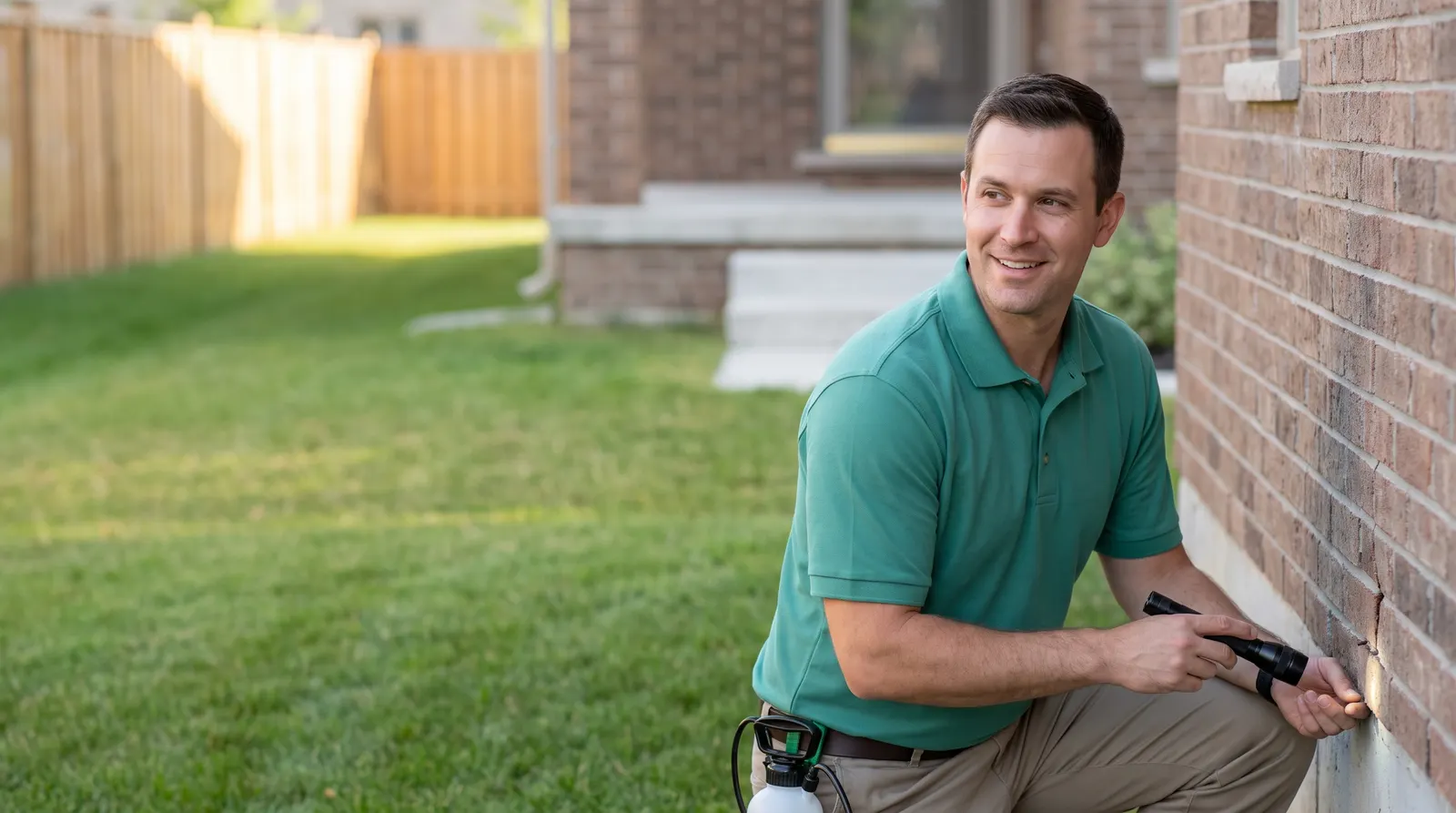
Pest control service in Cleveland is a professional biological mitigation and structural remediation process that identifies, eliminates, and permanently excludes insect and rodent infestations from residential and commercial structures.
Every service reflects the same meticulous attention to detail, whether it's a single job or a larger pest control sevice project across Cleveland.
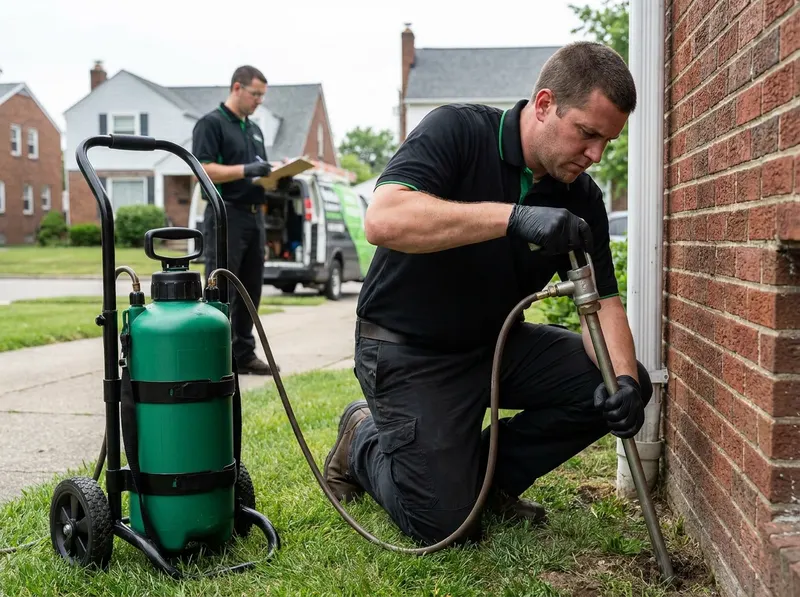
Subterranean termites (Reticulitermes flavipes) tunnel through damp spring soil into structural sill plates, floor joists, and subflooring across Cleveland neighborhoods. Liquid non-repellent termiticides such as fipronil are injected into trench lines and drilled slab perforations at precise 12-inch intervals around the structural foundation. This chemical creates an undetectable biological barrier where worker termites unknowingly transfer lethal slow-acting agents directly to the underground queen. Structural wood framing receives direct localized borate injections into damaged wood grain, establishing an enduring deterrent against wood-destroying organisms. Treatments strictly follow standards outlined by the US Environmental Protection Agency for residential soil barrier applications. Technicians inspect mud tubes along interior basement sandstone blocks, test timber hardness with sounding hammers, and establish sub-slab chemical barriers that halt structural cellulose consumption without releasing toxic odors into residential basement recreation rooms.
Get a quote →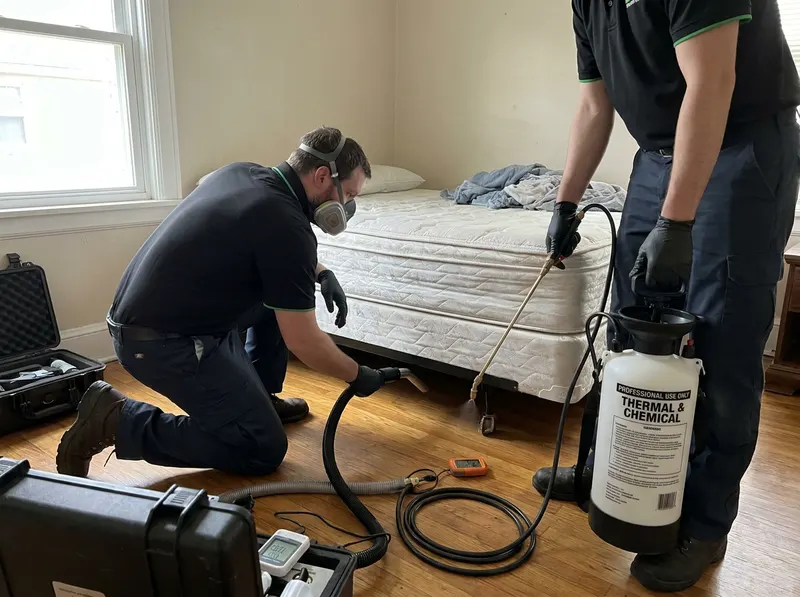
Bed bug (Cimex lectularius) infestations in urban multi-family and residential properties require comprehensive remediation to eradicate all developmental stages, including dormant eggs. High-output structural heaters elevate ambient room temperatures to 122°F to 135°F for four continuous hours, denaturing internal insect proteins within deep mattress seams, baseboards, and electrical outlet housings. Targeted contact sprays using microencapsulated pyrethroids and insect growth regulators supplement thermal treatments along structural tack strips, bed frames, and crown molding. Diagnostic vacuum extraction removes live clusters and shed exuviae, restoring clean hygiene to resting environments. Elmwick Extermination deploys wireless industrial thermal sensors across mattress cores and deep structural floor voids to guarantee uniform lethal heat saturation, eliminating the survival pockets that trigger recurring biological outbreaks in dense residential buildings.
Get a quote →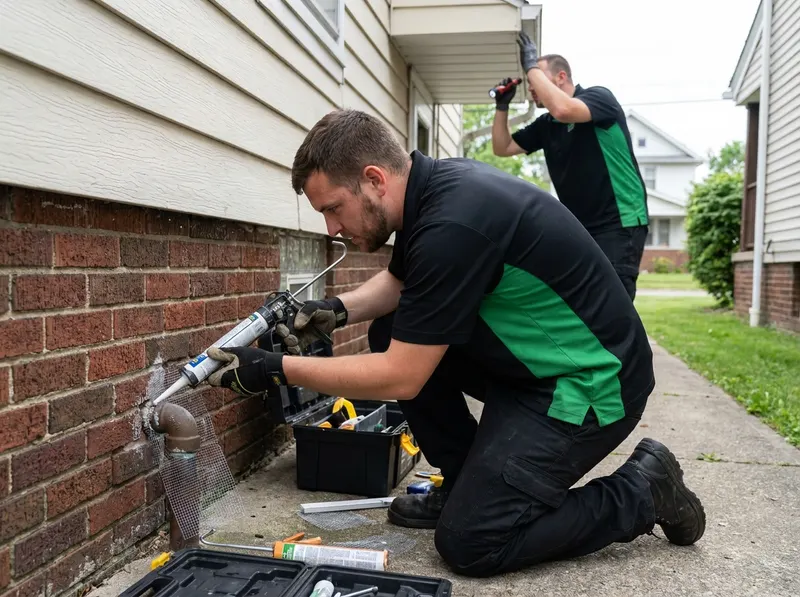
Rodent control terminates indoor activity and seals exterior vulnerabilities where mice and Norway rats breach sandstone foundations, basement window frames, and rim joists. Technicians install heavy-duty 16-gauge galvanized steel hardware cloth over ground-level foundation vents, pack weep holes with copper mesh, and seal mechanical utility penetrations using expanding polyurethane foam reinforced with stainless steel wool. Snap traps and enclosed tamper-resistant stations positioned along primary runways eliminate active rodents within 48 to 72 hours, eliminating the risk of interior wire gnawing, insulation contamination, and pathogen distribution. Every exclusion installation addresses gnaw vectors along garage door weatherstripping, sub-grade sewer lateral tie-ins, and masonry voids, ensuring complete mechanical isolation from Cuyahoga County's subterranean rodent populations.
Get a quote →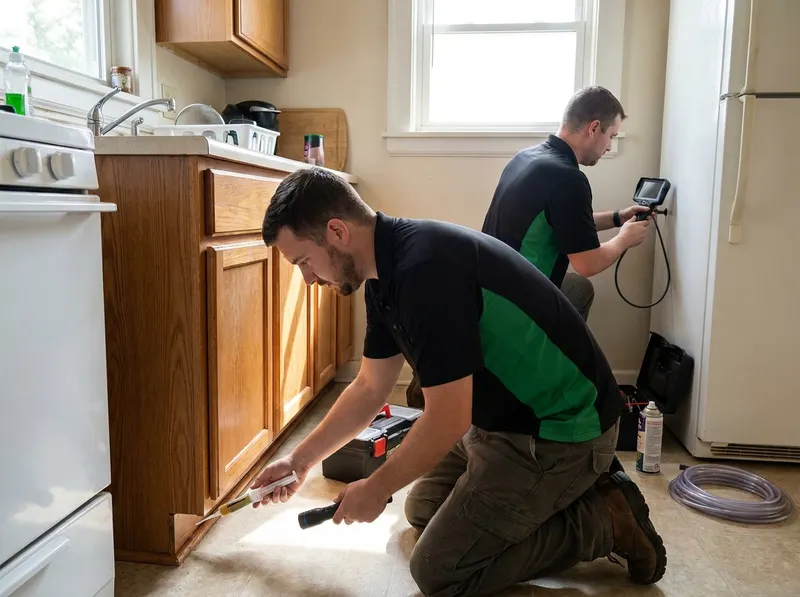
German cockroaches (Blattella germanica) thrive in the high-humidity, heated environments of residential kitchens, pantries, and bathroom subfloors. Remediation deploys abamectin and dinotefuran gel baits precisely into structural hinge mortises, cabinet corners, and plumbing chases where insects forage. Fine dry-aerosol silica dust injected into drywall voids dissolves insect lipid layers, producing rapid dehydration without chemical vapor dispersion in living spaces. Growth regulators break the reproductive cycle by rendering adult females sterile, permanently reducing populations beneath dishwashers, stoves, and waste disposals. Technicians document aggregation zones behind kitchen base cabinets using high-lumen inspection lamps, neutralizing breeding clusters and cleaning fecal spotting from appliance electrical compressors without contaminating food preparation surfaces.
Get a quote →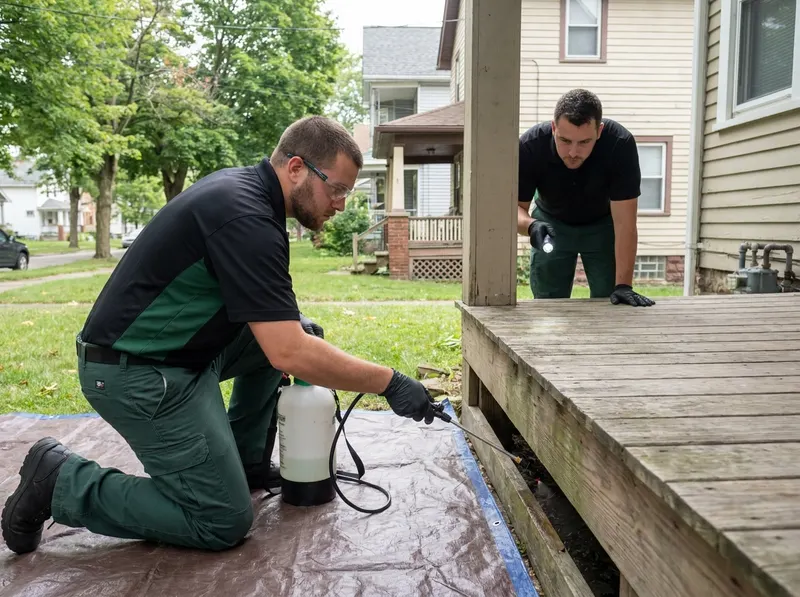
Carpenter ants (Camponotus pennsylvanicus) excavate smooth galleries inside damp structural wood, roof lines, and porch columns. Treatments pinpoint satellite nesting sites inside wall cavities using acoustic thermal diagnostics before applying targeted non-repellent transfer insecticides. Perimeter barrier sprays applied around the exterior foundation ground line prevent foragers from trailing along utility wires and tree limbs touching exterior soffits. Damaged framing timbers are treated with deep-penetrating borate formulations, halting internal wood loss and driving worker ants away from structural framework. Elmwick Extermination technicians trace sawdust-like frass deposits to hidden damp framing sections beneath flat roof drains, bay window cantilevers, and porch footers, neutralizing parent colonies and eliminating satellite nests concealed within dry interior partitions.
Get a quote →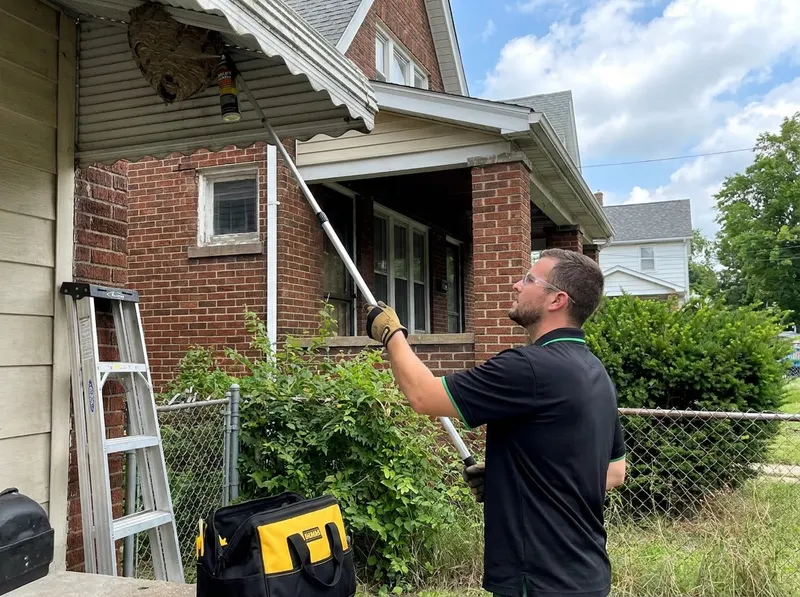
Yellowjackets (Vespula maculifrons), bald-faced hornets, and paper wasps build nests along exterior eaves, fascia boards, soffits, and within interior wall voids during warm summer months. Direct injection of pressurized pyrethrin dust rapidly neutralizes active nests at high elevations without requiring wall disassembly. Technicians remove exterior physical nest structures, clean pheromone residue off soffit boards, and seal entry fissures using expanding elastomeric caulk. Ground-nesting yellowjacket colonies located near walkways and patios receive focused soil applications to eliminate aggressive foraging threats. Technicians utilize high-reach extension applicators to neutralize elevated colonies up to thirty feet above grade, ensuring rapid elimination of stinging pests near residential entryways, gutters, and roof valleys.
Get a quote →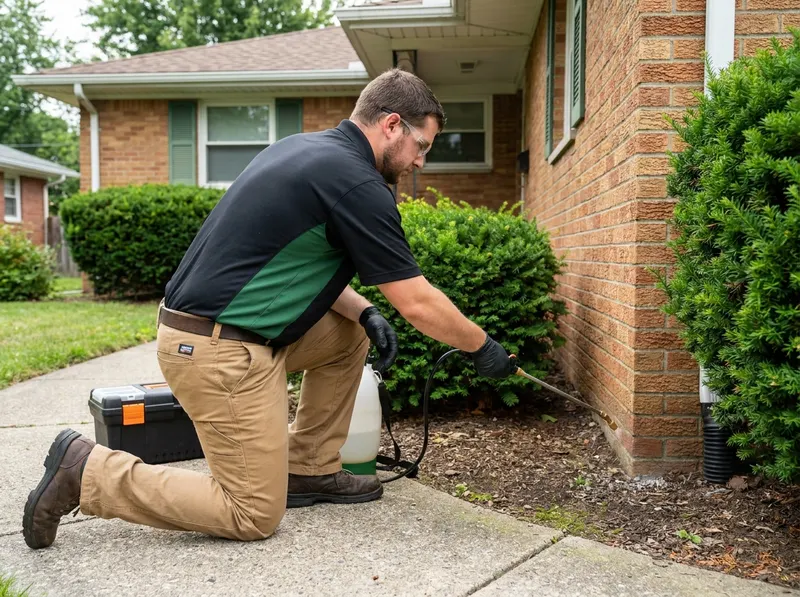
Centipedes, silverfish, earwigs, and spiders seek refuge in damp basements, crawlspaces, and ground-level bathrooms. Exterior barrier sprays apply a three-foot vertical and three-foot horizontal band of microencapsulated insecticide around the perimeter foundation, basement egresses, and garage thresholds. Interior dehumidification recommendations and focused residual applications along foundation sill plates eliminate the high-humidity microhabitats required for crawling arthropod survival. Barrier treatments form a microscopic crystalline shield across rough mortar joints, stone foundation faces, and siding thresholds, intercepting multi-legged arthropods before they establish interior harborage within ground-level living quarters.
Get a quote →Brown marmorated stink bugs, western conifer seed bugs, and boxelder bugs congregate on exterior vinyl siding and brick veneers during late autumn, seeking warm indoor hibernacula. Remediation applies broad-spectrum synthetic pyrethroids to sunny exterior walls, soffits, and window casings prior to interior mass migration. Technicians inspect and replace worn rubber door sweeps, install fine-mesh screen repairs on attic louver vents, and apply clear silicone sealants around window exterior casings to block overwintering pests. Diagnostic evaluations identify upper-story architectural entry cracks, ensuring exterior cladding assemblies resist pest infiltration during severe late-autumn temperature drops across Northern Ohio.
Get a quote →You get a firm, itemized quote for your pest control sevice before any work begins, no surprises, no pressure.
Careful prep, tidy work, and a full cleanup when we are done. We treat your home and belongings like our own.
The same trusted, background-checked team from the first call to the final check.
Selecting appropriate remediation depends on pest species, infestation density, and the architectural age of the structure. If you want immediate eradication for an isolated seasonal nesting site, such as bald-faced hornets in eaves or localized carpet beetles in a closet, choose a single-treatment targeted knockdown. If you want continuous defense against subterranean termites, recurrent Norway rats, or stubborn German cockroach populations nesting inside wall cavities, choose an ongoing comprehensive perimeter defense program.
The trade-off is upfront cost versus sustained protection: single-visit remediation addresses immediate biological activity at an entry minimum of $200 to $450 but provides no structural guarantee against secondary migrations three months later; recurring protection plans distribute costs quarterly between $200 and $350 while maintaining an unbroken barrier across porous sandstone foundations and plumbing chases throughout Cleveland's fluctuating freeze-thaw cycles. When addressing structural wood-destroying organisms like eastern subterranean termites or carpenter ants, localized spot foaming delivers rapid knockdown of active worker galleries within a single framing bay, whereas complete liquid perimeter trenching establishes five to ten years of verifiable soil saturation along exterior load-bearing walls. The operational trade-off centers on intervention invasiveness and immediate expense: localized foaming ranges from $275 to $550 with minimal site disturbance, while full-perimeter subterranean barrier installation requires excavating six-inch by six-inch trenches alongside brick footers and drilling through concrete basement slabs at an investment ranging from $850 to $2,200.
For multi-unit residential buildings in urban neighborhoods, chemical surface sprays suppress visible foraging insects, but thermal remediation remains the definitive standard for penetrating dense wall assemblies and high-density furnishings where bed bug egg clusters escape topical applications. Choosing structural heat elevation involves higher preparation protocols and upfront capital of $750 to $1,800, whereas repeated synthetic residual sprays require three or four staged visits over forty-five days, creating extended logistical disruptions for residential tenants. Structural mechanical exclusion delivers permanent physical defenses by closing entry points larger than one-quarter inch, whereas exterior poison bait boxes merely reduce surface rodent counts without resolving the underlying architectural vulnerabilities that allow vermin into heated interior floor cavities.
Elmwick Extermination technicians review these architectural variables directly with building owners during the preliminary on-site inspection, confirming exact physical parameters before initiating remediation.
Every project gets a firm, written price after an on-site visit. Ranges below for orientation.
Tell us about your pest control sevice job and we'll send a clear, written quote, usually the same day. Or just call and talk to a real Cleveland pro.
(216) 682-2079
Properties near Lake Erie, Edgewater Park, and the Gordon Square Arts District experience acute moisture infiltration that softens structural wood, accelerating carpenter ant and subterranean termite activity across Cuyahoga County. Aging housing stock near the West Side Market in Ohio City and vintage doubles in Tremont frequently feature porous sandstone basement walls and brick footers, creating open pathways for Norway rats seeking winter shelter away from urban utility corridors. Balloon-framed homes along Detroit Avenue and Lorain Avenue present continuous, open vertical wall cavities extending from stone foundation sills straight into attic rafters, allowing mice, bats, and yellowjackets to traverse multiple floor levels undetected. Lake Erie's maritime moisture band maintains ambient soil saturation throughout Collinwood and Edgewater, increasing ground-level wood decay and fostering high concentrations of eastern subterranean termites along buried framing timbers. In industrial-adjacent neighborhoods such as Slavic Village and Old Brooklyn, aging brick sewer infrastructure creates subterranean migration channels that Norway rats navigate directly toward residential exterior drainage traps. Elmwick Extermination uses tailored structural exclusion techniques specifically calibrated for early-twentieth-century residential framing styles. Technicians apply mortar restoration, galvanized steel screening, and copper mesh packing to bridge gaps between shifting sandstone footers and modern masonry repairs, ensuring century-old homes resist vermin infiltration through extreme Northern Ohio weather cycles.
 Elmwick Extermination