Seasonal perimeter defense restores physical boundaries to residential structures vulnerable to autumn pest pressures. In neighborhoods like Detroit-Shoreway, Tremont, and Ohio City, historic wood-framed homes and…
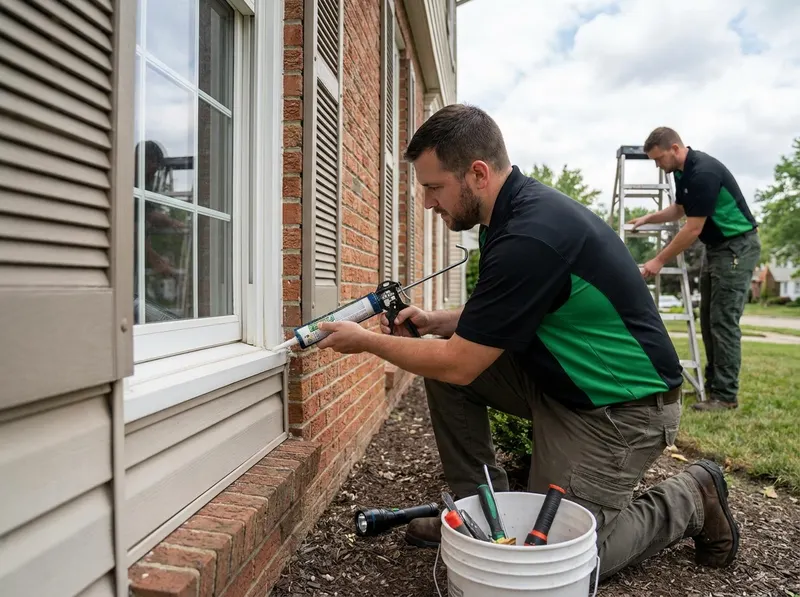
Seasonal perimeter defense restores physical boundaries to residential structures vulnerable to autumn pest pressures. In neighborhoods like Detroit-Shoreway, Tremont, and Ohio City, historic wood-framed homes and aging masonry foundations frequently develop settling gaps exceeding 0.25 inches. As ambient temperatures drop below 55 degrees Fahrenheit, overwintering pests such as the brown marmorated stink bug and the boxelder bug migrate toward thermal mass. According to the US EPA Integrated Pest Management guidelines, physical exclusion represents the primary defense against structural entry, dramatically reducing the reliance on chemical applications indoors.
Technicians evaluate exterior interfaces where utilities enter brick or siding, particularly around exterior plumbing conduits, gas meters, and air conditioner line sets. In lakeside areas like Edgewater and Collinwood, microclimates along Lake Erie create sustained wind patterns that drive insects toward sheltered eaves, soffits, and window frames. Sealing these vulnerabilities prevents pests from settling inside wall cavities where warm HVAC ductwork can draw them into finished living spaces. Elmwick Extermination utilizes non-corrosive galvanized hardware cloth compliant with standards established by the ASTM International, alongside exterior-grade polyurethanes that remain flexible across Northern Ohio freeze-thaw cycles.
Property owners evaluating exclusion services must consider structural permanence against seasonal chemical spraying. While broadcast pesticide barriers offer temporary knockdown, they degrade within 30 to 60 days under rain and UV exposure, leaving gaps exposed when late-autumn cold snaps occur. Physical exclusion resolves the entry vectors permanently without requiring continuous indoor pesticide exposure, which aligns with indoor air standards monitored by the CDC NIOSH. The trade-off involves higher upfront installation labor compared to a simple liquid spray, yet it prevents chronic nesting within wall insulation across Old Brooklyn and Slavic Village bungalows.
Step 1 involves an envelope audit mapping crawlspace vents, utility penetrations, and fascia boards. Step 2 requires mechanical cleaning of masonry joints to ensure proper bond adhesion for materials conforming to InterNACHI building envelope inspection recommendations. Step 3 installs pest-proof screening over architectural vents conforming to clearance codes overseen by the International Code Council. Step 4 applies silicone seals around door thresholds and low-elevation window casements. Step 5 completes a final perimeter audit to confirm that rodent runways along foundation ledges are fully obstructed.
Work across University Circle, Glenville, and Kamm's Corners accounts for regional environmental factors tracked by the Ohio Department of Agriculture, which regulates structural pest control licenses across Cuyahoga County. Structural sealing also follows wildlife barrier protocols supported by the Ohio Department of Natural Resources to prevent bat and field mouse entry into attics. Technicians maintain strict jobsite safety compliant with the Occupational Safety and Health Administration to access elevated rooflines and gutters safely. Structural maintenance guidelines from the US Department of Housing and Urban Development emphasize that maintaining an intact building envelope prevents secondary wood rot caused by trapped moisture around insect bore points. Contact Elmwick Extermination at (216) 682-2079 to inspect and seal exterior vulnerabilities before cold weather initiates pest migration.
Every job gets a firm, written price after an on-site visit.
Tell us about your seasonal exterior invader exclusion job in Cleveland and we'll send a clear, written quote, usually the same day.
 Elmwick Extermination